

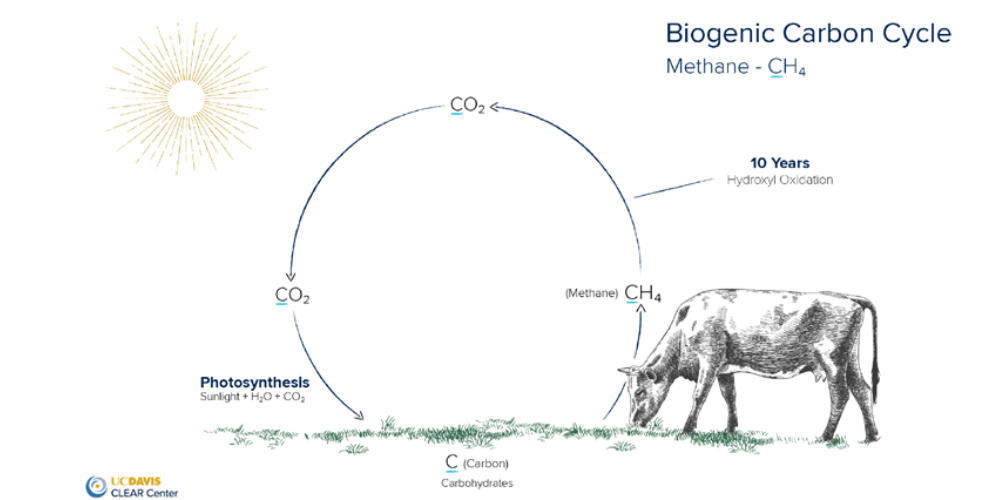
The methane cycle refers to livestock methane emissions being converted to carbon dioxide over 10 to 12 years with this CO2 being utilised by plants for growth through photosynthesis.
Ruminants subsequently consume above ground foliage producing methane to start a new cycle. Excess carbon from photosynthesis is sequestered in soils increasing soil health, water holding capacity and biodiversity. This natural cycle, producing around 30% of global methane emissions, does not add to GHG in contrast to that emitted by burning ancient carbon.
Ruminants eat high cellulose material which is further processed by gut microflora to produce nutrients in a digestible form, subsequently converted to energy for animal maintenance, muscle, milk and body fat.
Byproducts of digestion are urine, manure and a variable amount of methane. The quantity of methane produced relates in part to the diet, increasing with cellulose content. Higher starch and more digestible fibre diets reduce methane output as do some dietary additives such as seaweed derivatives.
Aerobic methane has a high GHG warming potential but a relatively short life span after which it is converted to CO2 by hydroxyl oxidation. A positive natural CO2 cycle is completed with a far greater quantity of CO2 utilised in photosynthesis by plants which breaks CO2 down to oxygen, released to the atmosphere, and organic carbon that is exchanged by soil microbes and fungi for soil nutrients utilised in above and below ground plant growth.
Surplus carbon is transferred to the roots and sequestered in soil as part of an exchange of soil nutrients for plant growth producing further material to be grazed. Increased soil organic carbon increases soil health, water holding capacity and biodiversity. As such ruminant produced methane should not be considered as an additional source of CO2.
In contrast to emissions from fossil fuel use which continually accumulate, methane from ruminant digestion is a short-term cycle with substantial potential to reduce net emissions due to enhanced soil carbon sequestration. The methane cycle is illustrated in the diagram below.
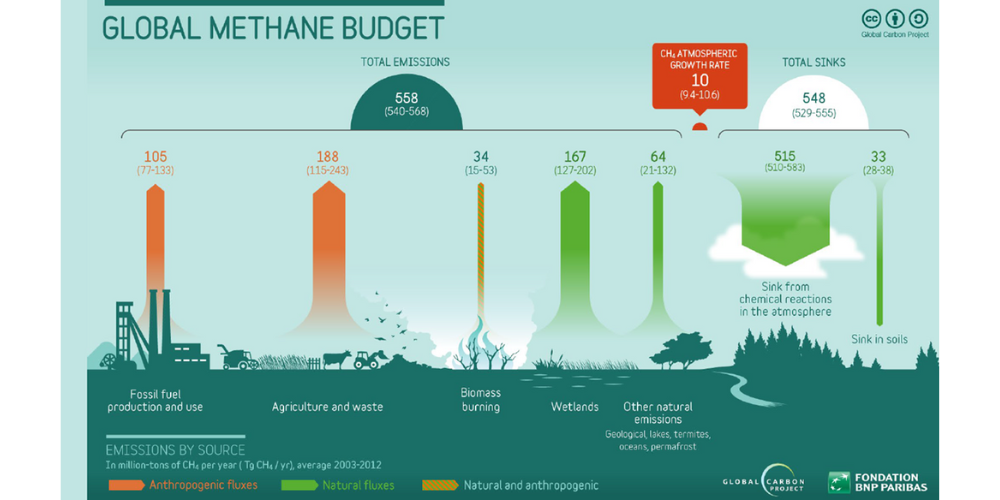
Animal agriculture contributes about 30% of global methane emissions with fossil fuels accounting for 33%, plant agriculture such as rice paddies 18% and waste from landfill about 4%. The mix of methane emission sources and carbon sinks is displayed in the Paribus illustration below.
The rate of increase in methane emissions has accelerated dramatically since the industrial revolution starting in the 1800’s as illustrated by the following NASA chart. Given that herbivore populations are believed to have remained similar over the last several million years, with ancient megafauna replaced by loosely equivalent domesticated species, it is highly improbable that livestock are responsible for this increase in methane. In fact, through soil carbon sequestration they may provide the most significant CO2 reduction opportunity.
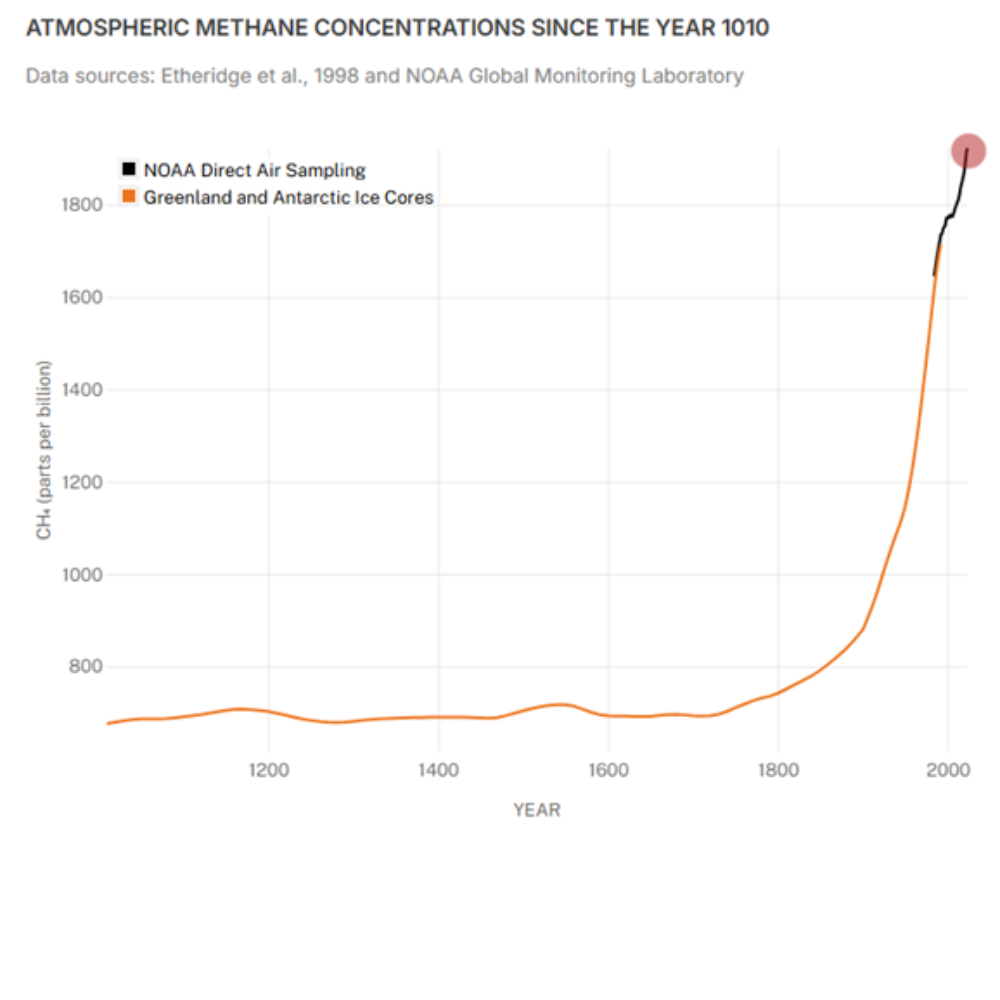
Source: NASA Earth Indicator, Jan 2025
