
Livestock both produce greenhouse gas emissions (GHG) and play a critical role in their reduction.
Unlike fossil fuel emissions that transfer ancient sequestered carbon to the atmosphere, livestock emissions contribute to natural biological cycling with their net impact ranging from negative to highly positive depending on location, species and management.
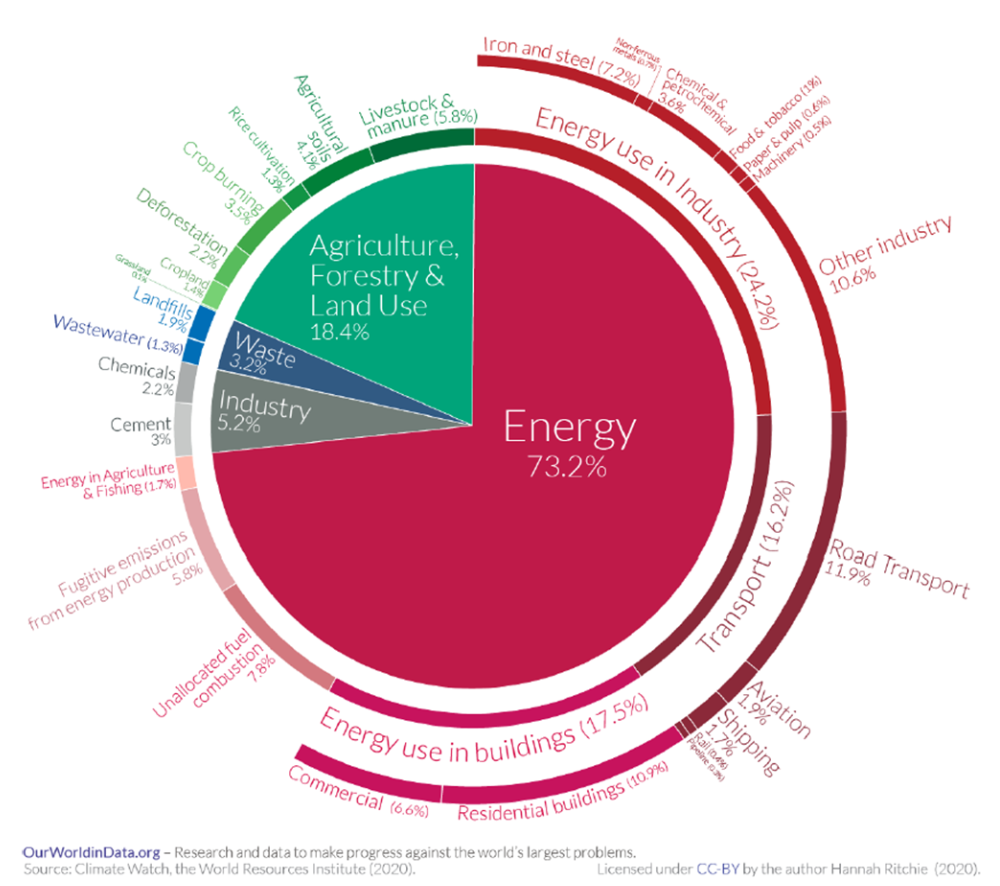
As displayed in in the schematic below agriculture, forestry and land use contributions to global emissions are small (18.4%) relative to energy production (73.2%), with all livestock and manure contributing 5.8%.
Livestock emissions contribute a relatively higher % of global methane (NH4) and nitrous oxide (N2O) than carbon dioxide (CO2) to the atmosphere with further differences relating to livestock species, non-ruminants such as pigs and poultry relative to ruminants such as sheep and cattle, and with management systems that range from extensive ruminant grazing to full confinement systems.
Only ruminants can digest fibrous high cellulose material, converting this human and non-ruminant inedible biomass into high quality nutrient dense meat and milk for human consumption, with methane being a byproduct.
Methane is a potent GHG gas but has a short life cycle being converted to CO2 within a 10-to-12-year period by hydroxyl oxidation.
This CO2 is utilised by plants through photosynthesis which releases oxygen to the atmosphere and transfers carbon to plant tissue above and below ground by interactions with soil microbes and fungi that supply other nutrients. Soil carbon is increased by active plant growth and in well managed grazing systems results in substantial soil sequestration of atmospheric CO2, many times greater than animal emissions, creating a carbon sink. Given stable ruminant production methane is continually recycled and does not add to atmospheric warming.
Grazing also directly adds manure and urine to the soil which is incorporated by trampling. Manure and urine also interact extensively with soil fertility, plant growth, use of synthetic fertilisers and with emissions, with N2O of principal GHG concern. Utilisation of manure through grazing on pasture and from confinement systems when applied to crops, pasture or biogas production reduces N2O emissions from the manufacture and application of synthetic fertilisers and supports plant production and soil health whereas poor management results in greater waste and GHG impact through atmospheric emission.
A further critical GHG consideration is the emissions generated per unit of human edible product produced with higher productivity, delivered by genetic advances, improved animal health, nutrition and management that produces additional product at a younger age, each reducing emissions per unit of human food.
This aspect is important in intensive systems for both non-ruminant and ruminants where criticism is often made regarding use of human edible grains in animal feeds. In fact, a large portion of intensive monogastric livestock diets is often food industry and agricultural byproducts or downgraded grains resulting in more human edible protein being produced than is consumed.
Intensively fed ruminants, such as sheep, beef and dairy cattle, in general spend their early life on grassland and achieve an enhanced lifetime GHG and feed efficiency due to higher productivity and younger harvest in the finishing stage.
The complimentary utilisation of rangeland pasture and intensive finishing is a major management strategy to balance seasonal grass production, drought and severe winter weather to achieve increased human nutrition with reduced environmental impact.