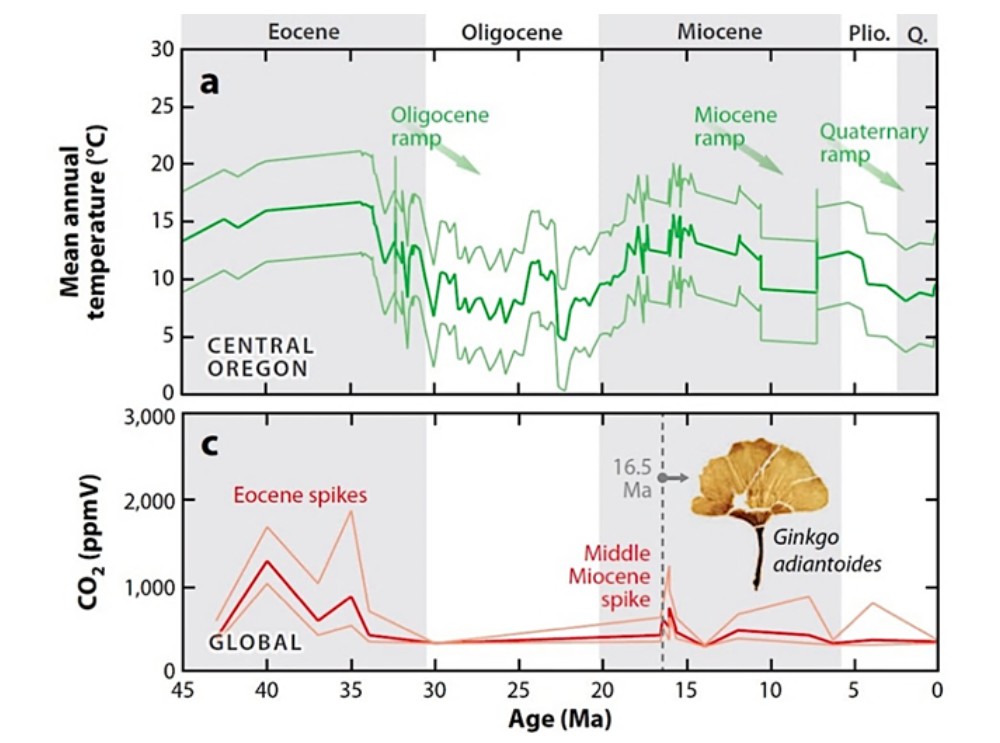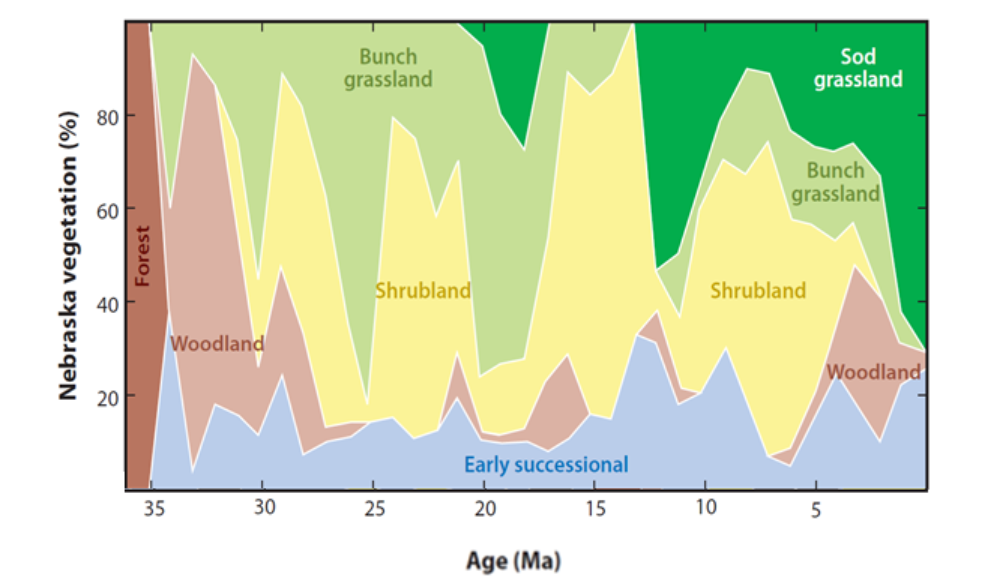

Climate change is not new! Changes to a drier climate 2 to 4 million years ago resulted in a transition from wet forest dominated vegetation to open savanna grassland landscapes.
This was accompanied by the evolution of large grazing animals, the megafauna, and was also associated with human evolution.
Transitory grazing by megafauna populations kept landscapes open, as did human use of fire. In fact, vegetation management by grazing animals is thought to have become a dominant natural mechanism by which prehistoric landscapes self-managed their greenhouse gas balances.
Domesticated livestock now fill a similar niche in maintaining healthy grasslands with management influencing the landscape impact.
Between 3 and 15 million years ago the evolution of grazing animals coincided with changes on global climate patterns as vegetation shifted from a wetland closed canopy dominated habitat to a worldwide expansion of grasslands. The worldwide spread of large grazing animals, including the megafauna, was later associated with human evolution.
Evidence from Africa shows how megafauna kept landscapes open by efficiently consuming massive quantities of vegetation, especially by seasonal migrations that follow the peaks in plant productivity. Large herbivore migrations are also assumed to have facilitated the formation of deep organic soils that are now used by some of the most productive crop production systems worldwide.
The development of humans, including their use of fire to contain woody vegetation and promote grassy biomass, increased the productivity of the ecosystem and the availability of prey. Hunting also massively influenced megafauna populations with most now extinct. Well documented examples include the scale of bison herds in the USA and their decimation by hunting in relatively recent times. Earlier European examples include aurochs and wild horses.
Domesticated livestock
Evidence suggests that current domesticated herbivore numbers are similar or less than those present prior to domestication.
Domesticated livestock species now fill a similar niche in utilising and maintaining grassland environments with their impact on species, the proportion of woody shrubs, soil health, water holding capacity and biodiversity impacted by human management. There is strong evidence of modern grazing management resulting in the extremes of both landscape degradation and of restoration. Overgrazing, and conversion of healthy pasture to cropping have led to substantial reductions in soil fertility, soil structure, water holding capacity and productive capacity in many regions. This damage has contributed to flood events, dust storms and desertification with related climate influence.
Conversely contemporary evidence establishes that these landscapes can be restored through the use of livestock managed to reflect the migratory intense grazing patterns that created the rich soils of many global grassland regions.
Restoring soils
Restoration, and improvement of currently healthy soils, through contemporary grazing management systems incorporating livestock grazing intensity and rotation related to plant species and growth provide highly significant large scale global environmental benefits. These stem from symbiotic natural cycles of improved plant growth due to appropriate grazing leading to increased soil organic carbon, transferred from atmospheric CO2 via photosynthesis, increased above and below ground biodiversity, improved soil structure and increased water retention.
Such changes retain and increase soil fertility, reduce flood intensity and drought by retained water in the landscape, influence climate through water and land surface temperature and, not least, provide increased nutrient dense food for an expanding human population.
Some past farming practices have aided greenhouse gas release. However, modern grassland agroecosystems are a potential carbon sink already under intensive human management, and carbon farming techniques may be useful in curbing anthropogenic global warming.