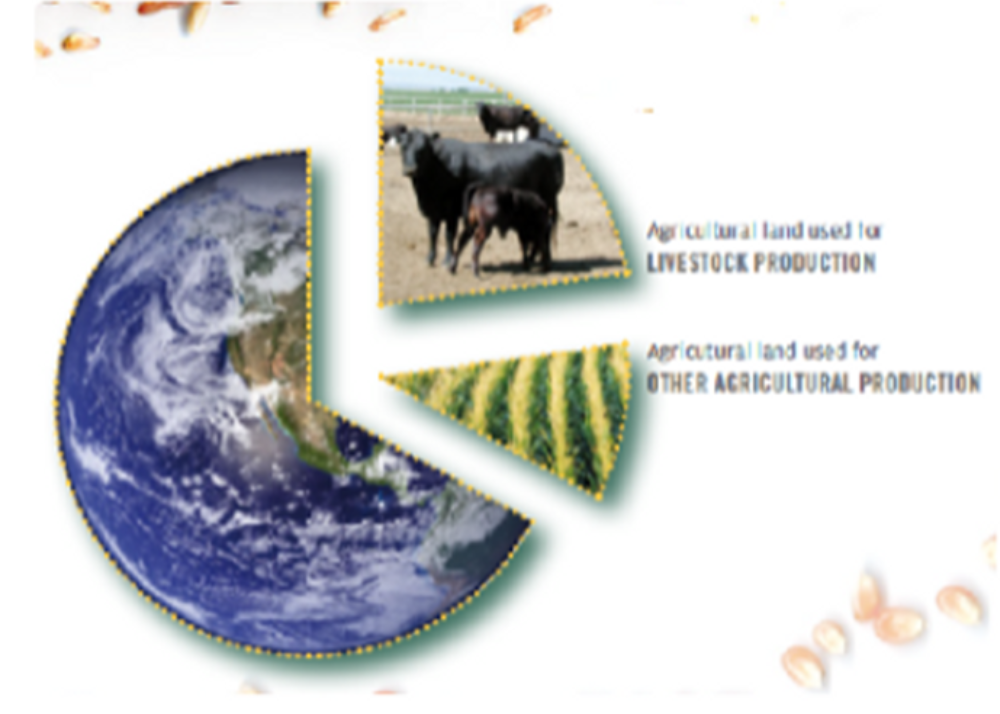

Only 1/4 of the earths’ surface is land, the balance water and ice.
Of this 1/4 only 37% (FAOSTAT, 2018) is Agricultural land. Of this Agricultural land only about 1/3 is arable & suitable for crop production and this may decrease with climate change.
The remaining 2/3 cannot grow crops due to poor soils, inadequate rainfall or rough terrain. This non arable land grows high cellulose plant material in the form of grasses, shrubs etc which are inedible for humans.
Ruminants convert this material to high quality nutrient dense human edible food contributing 25% of the world’s protein and 15% of daily energy. This up-scaling delivers both nutritional and economic survival to millions of small-scale farmers in low- and medium-income regions (LMIC’s) and also is an important dietary and economic factor in developed regions.
Ideology based views that ruminants have no place in a sustainable food system misunderstand, and misrepresent, the reality that non arable land cannot be diverted to crops while providing critical high-quality nutrition to many of the world’s most vulnerable by utilising non-human edible material.
Beyond human nutrition ruminant livestock can also be instrumental in improved soil carbon sequestration and for thousands of years have provided nonfood benefits including natural fertilizer, draught power, hides, wool, lanolin, tallow and a growing array of medicinal and other co-products.
These points are universal and apply directly to areas such as Welsh hill farms, Scottish Highlands, Yorkshire moors much of Ireland and Northern Ireland and many other UK areas and equally to dry and arid regions of typical of Australian and African cattle production.