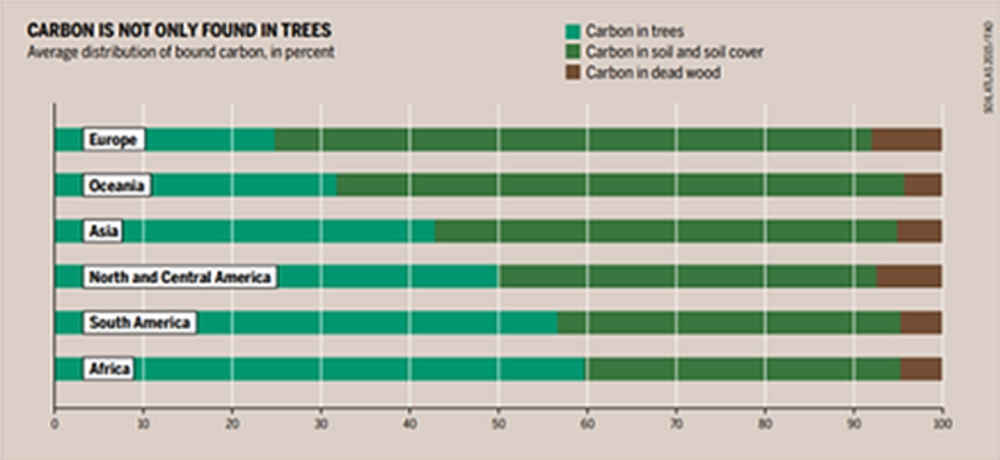

Globally soils contain three to four times more carbon than either the atmosphere or terrestrial vegetation.
The balance of soil carbon sequestered relative to that lost to the atmosphere is consequently critical to global climate trends and directly related to management systems.
Controlled time grazing with effective rotation dramatically increases plant growth, animal production and carbon capture. Trampling of a portion of plant material and manure also adds to soil organic matter, water holding capacity and improved soil structure. Inappropriate agricultural practices, including both over and under grazing and synthetic fertilizer use have resulted in soil degradation and carbon losses over time in many locations.
Regenerative management practices including high pressure short duration grazing, agro-forestry and silvopasture have however been shown to build soil organic carbon at rates that have significant potential to reduce atmospheric GHG levels. Application of animal manure can also continuously build soil carbon as documented by work reporting manure application annually over a 45-year period.