
While often denigrated in social media and popular press by planetary-sustainable food and vegan activists, feedlots and intensive dairy operations play an important role in utilisation of by-products and in mitigating the impact of climatic fluctuation, soil and pasture damage and animal welfare related to meat and dairy production.
In Australia feedlots provide a critical role during dry seasons and drought events by removing cattle from pasture that would otherwise be severely damaged and enabling cattle to continue to grow to optimum weight and quality.
In the Northern USA and Europe feedlots or barns provide a means for cattle to survive and thrive during the winter when ground is frozen under substantial snow. In much of Europe housing of livestock during winter prevents excessive pasture and water system damage through pugging and ensures year-round supply of high-quality food. In all locations a major ration component for intensive beef and dairy is non-human edible by-products in addition to stored forages.
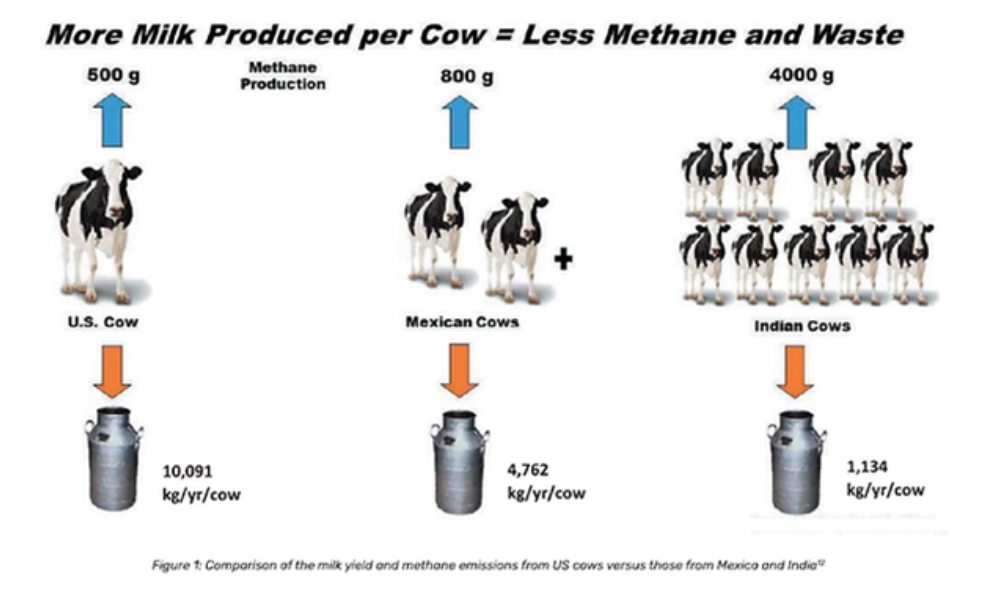
Each of these scenarios complement predominantly grassland based ruminant production systems and moderate seasonal environmental challenges and feed scarcity enabling a stable human food supply and efficient lifetime conversion of feedstuffs to human food. The higher lifetime production rates obtained are associated with reduced feed and energy inputs and lower methane emissions per unit of human food nutrients produced.
Intensive operations are also typically located close to the feed supply with feedlot manure and composted material from compost barns a valuable resource used to fertilize crop and pasture, generally within the local district which is also the source of most ration ingredients.